ACRU Files Amicus Brief Defending the Attorney General’s 60-Year-Old Power to Inspect Voter Records
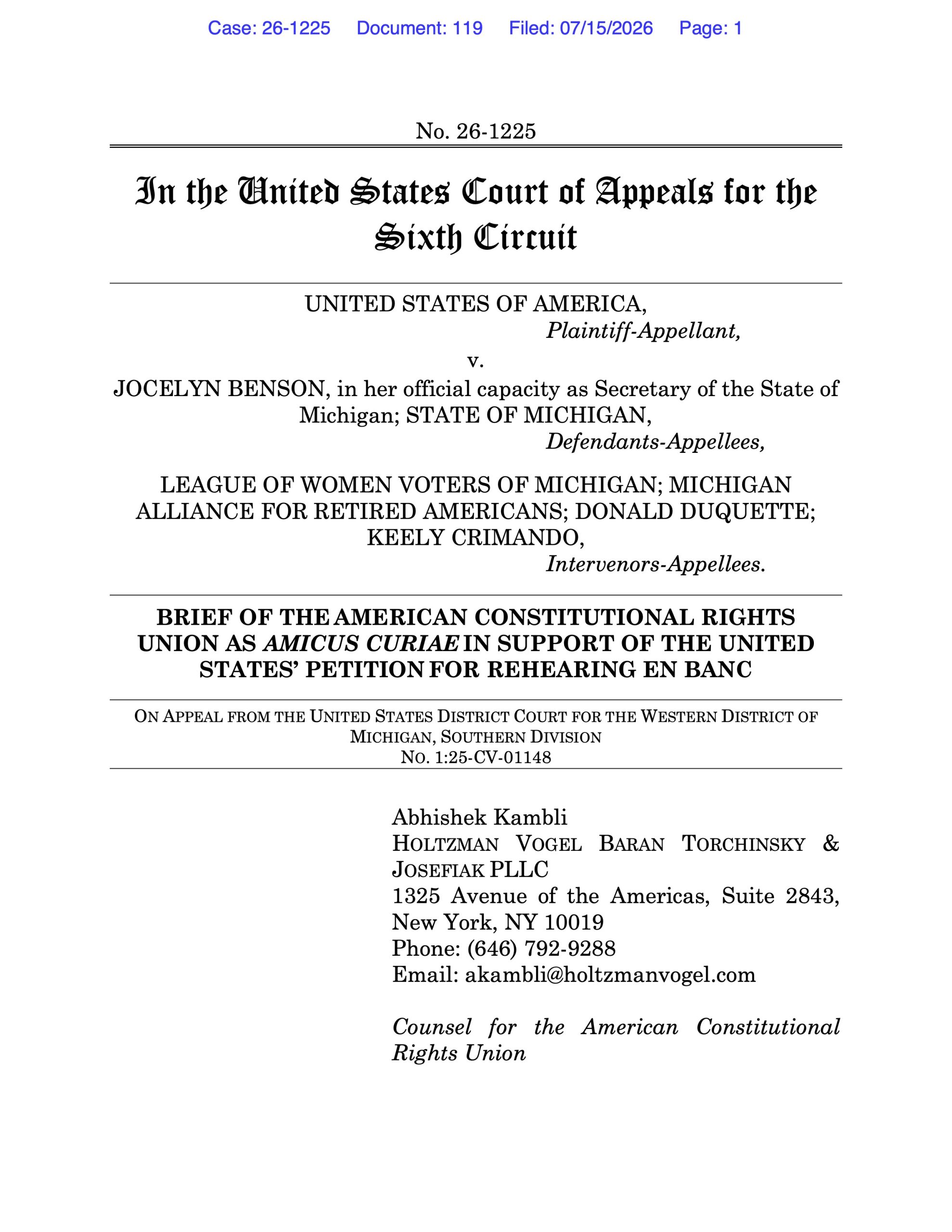
ACRU has filed a “friend of the court” brief in the Sixth Circuit Court of Appeals, backing the Department of Justice’s request that the full court rehear a case with real consequences for federal election oversight.
Here’s what’s at stake.
A civil rights-era law, Title III of the Civil Rights Act of 1960, requires states to retain and preserve their voting records and to hand them over when the Attorney General asks. Congress passed it to give the federal government a way to investigate registration practices and confirm they square with constitutional principles. It has been on the books for more than sixty years.
In United States v. Benson, a three-judge panel held that Title III cannot reach Michigan’s qualified voter file, the state’s official voter roll. The panel’s reasoning: newer federal laws, the National Voter Registration Act and the Help America Vote Act, require states to update their rolls and remove ineligible voters. Preserving records and updating records, the panel said, put the statutes “on a collision course.”
ACRU’s brief explains why that collision never happens.
Election officials can perform routine list maintenance and still preserve the underlying records. Updating a voter’s status in the current snapshot does not destroy, conceal, or corrupt the registration record behind it. Those are different acts, and Title III targets only the second kind. The statute’s criminal provisions reach only willful violations, meaning conduct the official knows to be unlawful. A clerk who removes a deceased voter because federal law commands it is not committing a federal crime.
ACRU is asking the full Sixth Circuit to take up the case and restore it.